Modal Title
Lorem ipsum dolor, sit amet consectetur adipisicing elit. Iusto porro officiis beatae accusantium nam quis soluta? Sapiente in non inventore, explicabo distinctio, nostrum impedit delectus obcaecati corporis officiis, nihil repellendus.

Lorem ipsum dolor, sit amet consectetur adipisicing elit. Iusto porro officiis beatae accusantium nam quis soluta? Sapiente in non inventore, explicabo distinctio, nostrum impedit delectus obcaecati corporis officiis, nihil repellendus.

Blog:Preparing for Your Diabetic Eye Exam in East Windsor: What to Bring and Discuss

Living with diabetes means paying close attention to your overall health, including your vision. Diabetes can affect the small blood vessels in your eyes, sometimes causing damage before noticeable symptoms develop. At East Windsor Eye Care, we provide diabetic eye exams in East Windsor, NJ, to help identify early changes and protect your long-term eye health.
Knowing what to bring and discuss during your appointment can help us better understand your health and provide personalized care.
Diabetes increases the risk of several eye conditions, including diabetic retinopathy, diabetic macular edema, glaucoma, and cataracts. These conditions can develop gradually, making routine eye examinations essential even when your vision seems normal.
During a diabetic eye exam, we assess your vision and examine the health of your retina, optic nerve, and other eye structures. We may use pupil dilation and retinal imaging to identify changes associated with diabetes.
Regular monitoring allows us to detect potential problems early and recommend appropriate treatment or follow-up care.
Preparing for your appointment helps us evaluate your eye health in the context of your diabetes management. Before visiting our East Windsor office, consider gathering the following:
Recent blood sugar readings and A1C results: These help us understand how well your diabetes has been managed over time.
Current medication list: Include diabetes medications, insulin, supplements, and medications for other health conditions.
Medical history: Bring information about your diabetes diagnosis, high blood pressure, cholesterol levels, and other relevant conditions.
Current glasses or contact lenses: These allow us to evaluate your existing prescription and identify vision changes.
Previous eye exam records: If available, past examination results can help us monitor changes in your eye health.
You should also bring your insurance information and a list of questions or symptoms you want to discuss.
Your diabetic eye exam is an opportunity to better understand how diabetes may be affecting your vision.
We encourage patients to ask whether there are signs of diabetic retinopathy, how frequently they should have their eyes examined, and whether changes in blood sugar could be affecting their vision.
It is also important to mention symptoms such as blurry vision, fluctuating eyesight, new floaters, or difficulty seeing at night. Even minor changes may provide valuable information about your eye health.
If you experience sudden vision loss, a sudden increase in floaters, flashes of light, or a curtain-like shadow in your vision, seek urgent eye care rather than waiting for a routine examination.
After your diabetic eye exam, we review our findings and explain whether additional monitoring, treatment, or specialist care may be necessary.
Many patients with diabetes benefit from annual dilated eye examinations, although some require more frequent visits depending on their medical history and retinal health.
If your pupils are dilated, you may experience temporary light sensitivity and blurry near vision. Bringing sunglasses and arranging transportation if needed can make your visit more comfortable.
At East Windsor Eye Care, we are committed to helping patients with diabetes maintain healthy vision through comprehensive examinations and personalized care. Contact East Windsor Eye Care at 104 Hickory Corner Road, Suite 203, East Windsor, NJ 08520, by calling (609) 308-2850 to schedule your diabetic eye exam.
Flowbite is an open-source library of interactive components built on top of Tailwind CSS including buttons, dropdowns, modals, navbars, and more.
Check out this guide to learn how to get started and start developing websites even faster with components on top of Tailwind CSS.
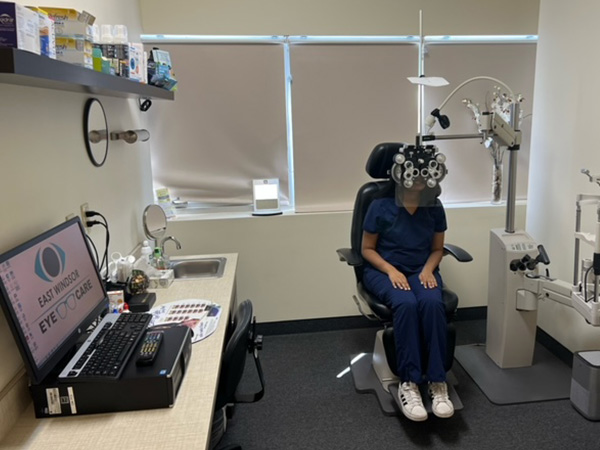
Discover personalized eye care excellence with our comprehensive services. From eye exams to advanced diagnostics, trust us for all your vision needs.
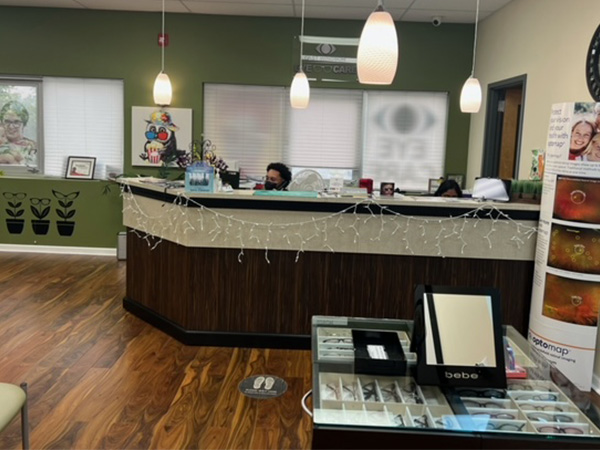
For non-urgent questions or to learn more about our services, contact us today!
© 2026 East Windsor Eye Care. All rights Reserved - Accessibility Statement - Privacy Policy - Sitemap
Managed and Designed by 
